Tuesday, 22 March 2011

Photogenic Universe


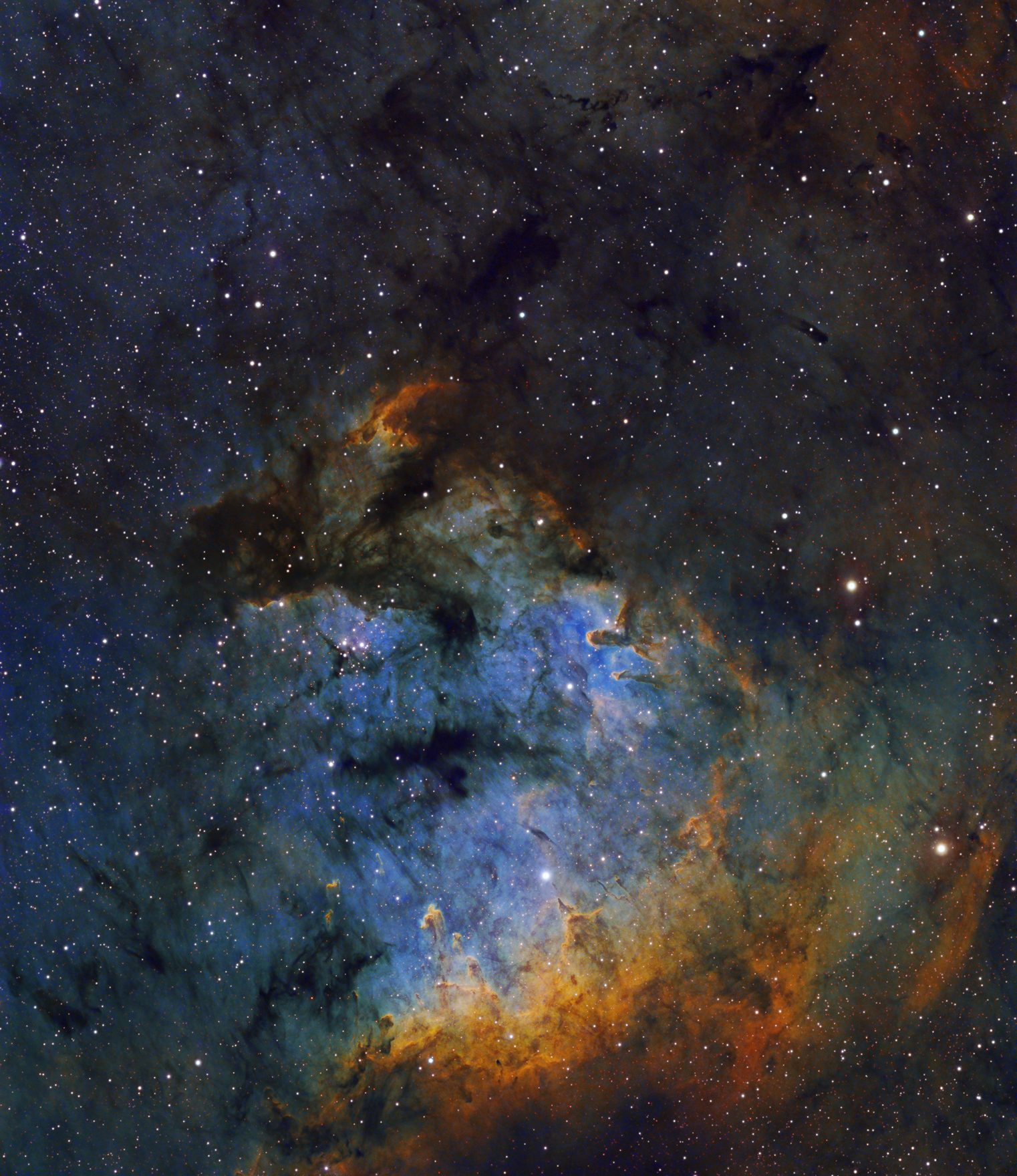
Astrophotography has its well-earned place in arts and in science. Photographic plates of the sky were the first optical “data” that scientists of mid-19th century used .As the technology progressed more amazing photos emerged either from cameras or telescopes. Today astrophotography is a highly specialized art requiring time and patience to achieve a good result. Although it doesn’t have the same scientific value as before it remains breathtaking every time. This is due to the nature of the subject itself: Universe,always there,always posing.

The Photo:This is not an astrophotography image. I like to think of it as a tribute to the “mundane sky”. That is Vega in the clouds, the brightest star in the constellation of Lyra , the 5th brightest star in the sky. My camera that took this image is made of “stuff” that was tossed in our cosmic neighborhood from a similar star more than 5 billion years ago when it violently exploded. The photo above is 25 years old (Vega is 25 light years away), yet it was taken yesterday. All this is happening just above your head.[85mm@f4,25secs,iso 400]

Friday, 25 February 2011

Speaking in Color


Photography started in Black and White, and pretty much remained in black and white for more than a century: the classic look of a serious art. Around the mid-seventies though, color started to appear on film, sometimes by choice sometimes by experimentation, signaling a new era for the media. It added a new layer of information to that masculine 20th century feel that people so much had gotten used to. Certainly such change was bound to create controversy that was not in favor of color in its early beginning. But then, in 1971, William Eggleston's Tricycle, with its rusted, red handlebars, its wonderful blue toned seat, and the chromatic play of the white rims existed by itself, for itself, through itself. It stands exalted. Color is not an afterthought here. Forty years later and although tricycles still have 3 wheels, the spectrum of light has Photoshop. It is the digital darkroom, the place where color can be more than what it is in reality. Controversial but required in this digital age, sublime yet vulgar sometimes, image processing for photography has undoubtedly created a new art media, and that’s a good thing right?

The Photo: This is taken in an urban area.It’s really cropped so that all the buildings have been left out. It’s  a small part of a larger image, and this is what made the most sense within the photo. The temperature gradient of the colors has been altered to make a more dramatic (?) contrast. Shot with the Tokina 11-16mm [16mm@f8, 1/250sec, iso100]

Monday, 7 February 2011

Take a picture of what?


Many people argue that everything has been seen and has been shot. In this digitized frantic era where dozens of Terabytes of images are being generated every second that seems like a valid argument. Still any given day you can see pictures that amaze you and involve the most mundane things in the world. The reason is that the people that took them were thinking outside the box. They see the world changing with every angle and try to make a photo out of it. Yes there is a photo for everything out there but hundreds of ways to take it; you just need to have an open mind.For example you have a wide-angle lens, go closer to your subject, shoot landscapes at 200mm, get down looking up and vice versa. The possibilities are endless and I have just started to explore them.

The Photo: I was with some friends at a climbing location outside Athens, shooting wide-angle all day long having fun, enjoying a perfectly nice day. Then when we were about to leave I saw this flower amongst others of its kind to stand triumphal in the sunset light with the mountains in the background. I said this might be a good shot, if I can portray the light and the shape of the mountains. Changed lens and shot it. It’s not that interesting capture yet I am quite happy I took it.Weird.(f1.8 ,85mm,iso100,1/3000sec)     
 

Friday, 4 February 2011

Pretty Pictures


Recently a friend of mine sent me a funny graph about a photographer’s life. Although I did LOL-ed a lot, there was an annoying truth about that graph. It showed that even a lifetime cannot be enough for perfecting your photography. Many top photographers would agree with that. There is no perfect art, there is no perfect picture. From my experience, and I believe a lot of people would agree, when you start taking pictures you think you are doing ok, that you are on the right track. This can be quite a trap resulting in limiting your progress into becoming a better photographer. Taking one out of focus image can be a mistake, taking twenty out of focus images it’s a style…your style.  And maybe you don’t want that.Today’s cameras do a pretty good job on automating everything, making very easy to take pretty pictures like the one above. Don’t go for Auto. Go for manual ,it will get you there faster.

The Photo : This is taken on a really windy day. I saw the leafs on the ground settle after a gust of wind brought chaos to the scene,lowered the camera at the pavement level,took only 3 frames.Would a photo with the leafs dancing in the air have been more interesting than this one? I will never know.I left and thats a mistake.Shot with the Canon 550D @f2.2 Canon 85mm lens[Get this lens!], iso 100,1/2000

Monday, 24 January 2011

So we start...


What is an artist? What is a photographer? Is the specific media involved in taking photographs the answer to that question? When the photons are captured on film or on CCDs they represent a moment to be interpreted by our brains.We press the shutter release because on most cases we think there is something there,at that moment to tantalize our neurons later, on many levels artistic or otherwise.These are huge questions that I hope I can answer as I go along.This Blog will be on a photographic journal format with pictures taken and descriptions tagged along.I hope this will be helpful to me and  anyone seeking an insight of what is photography.Hopefully when we reach the end,this will look more like a photographers blog than a random collection of images.Yeap thats the goal.

The Photo: This is the ceiling lamp of a friend taken with a wide-angle lens (Tokina 11-16mm f2.8[1/30secs@16mm iso100] ).I liked the pattern of depth in the image and after a lot of color play I decided to go for Black and White.


Readers